

Printing Industry News, Equipment and Business Operations
Follow the equipment, automation, materials, workflows and economics reshaping commercial print. CBusted explains what changed, why it matters on the shop floor or Pu0026L, and what operators should understand before acting.
Printing Industry News, Equipment and Business Operations
Commercial printing decisions rarely stay inside one department. A faster press can expose a weak finishing plan; a less expensive substrate can create waste, rework, or customer complaints; and new software can shift labor instead of removing it. CBusted covers the printing industry through those connections: what changed, what it costs, which constraint it addresses, and whether the operating case holds up on the shop floor and on the P&L.
The publication follows industry moves, presses and production equipment, finishing automation, materials, workflow software, business economics, sales, and packaging. The point is not to recycle launch language or treat a specification sheet as a decision. Coverage puts capacity, labor, setup, quality, installation, utilization, and demand in the same frame, because a change that looks efficient in isolation can simply move a bottleneck to a more expensive part of the operation.
CBusted is for shop owners, managers, production leaders, finishing teams, equipment buyers, sales leaders, and readers following the business of print. Use it to make sense of market movement, frame better equipment questions, compare operational tradeoffs, and identify the assumptions worth challenging before a purchasing, staffing, pricing, or workflow decision advances. The useful question is rarely whether a tool is impressive; it is whether it solves the right problem at the required volume.
Latest from CBusted

Quick Prints Fulfillment and the Convergence of Print, Kitting, and Ecommerce Logistics
Print, kitting and ecommerce fulfillment can form one valuable operating system, but only when inventory, order data and service accountability connect.…
Read more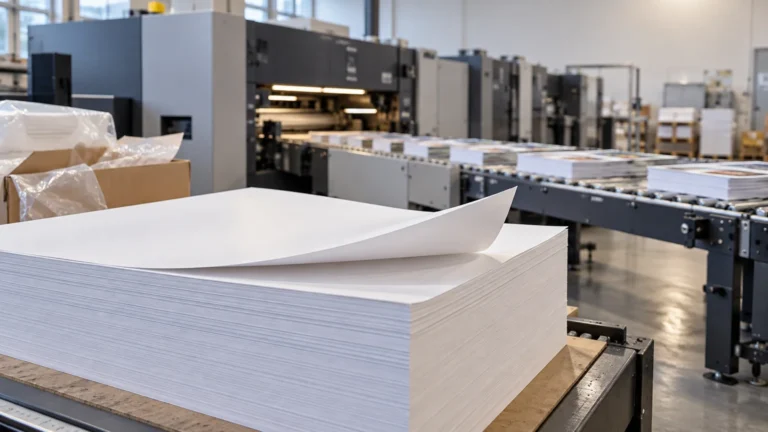
Static, Curl, and Moisture: The Substrate Problems That Become Production Problems
Static, curl, and moisture imbalance turn ordinary paper into a feeding, register, and finishing problem. Here is how to separate the…
Read moreMake the next production decision clearer
Useful print reporting connects technical claims with operating conditions. Rated speed says little without run length, makeready, uptime, staffing, finishing capacity, and saleable output. A material choice depends on the press, ink or toner system, handling, conversion, and final application. Automation deserves the same discipline: count the touches it removes, the exceptions it creates, the training it requires, and the volume needed to justify the investment. The critical comparison is not a brochure promise against a blank page, but the proposed change against the current process, its costs, and its recurring delays. That comparison makes room for maintenance, scheduling, cash demands, quality risk, and the people expected to make the system work.
CBusted approaches equipment, workflow, and business coverage with that practical test in view. Expect direct explanations, relevant specifications, and attention to the numbers behind the claim, alongside the limits that vendors and enthusiasts may leave unstated. The goal is not to prescribe a universal answer. It is to help readers distinguish a meaningful operational improvement from an attractive demonstration, vague efficiency language, or a calculation that fails when maintenance, labor availability, scheduling pressure, installation requirements, or demand changes. The next sound decision starts by defining the constraint, gathering the missing numbers, and asking who will carry the work when the plan meets a normal production day rather than an idealized scenario with every department fully staffed.